A new sound, dashboard light, vibration, or change in performance may seem minor at first, but it can provide information about the condition of the vehicle.
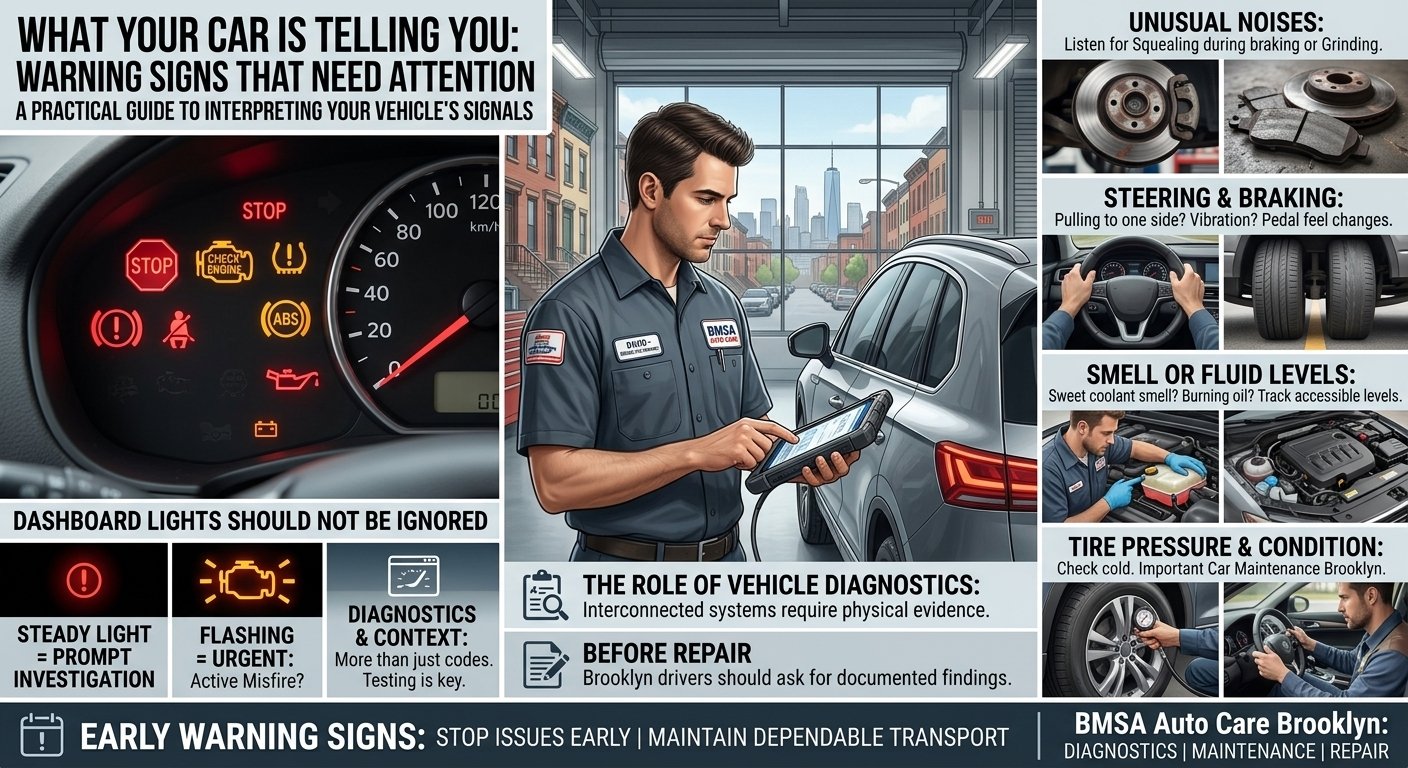
Dashboard Lights Should Not Be Ignored
A red oil pressure or overheating light may indicate a situation where continuing to drive could cause serious engine damage. The safest response is generally to stop in a suitable location, switch off the engine, and consult the vehicle handbook or a qualified technician.
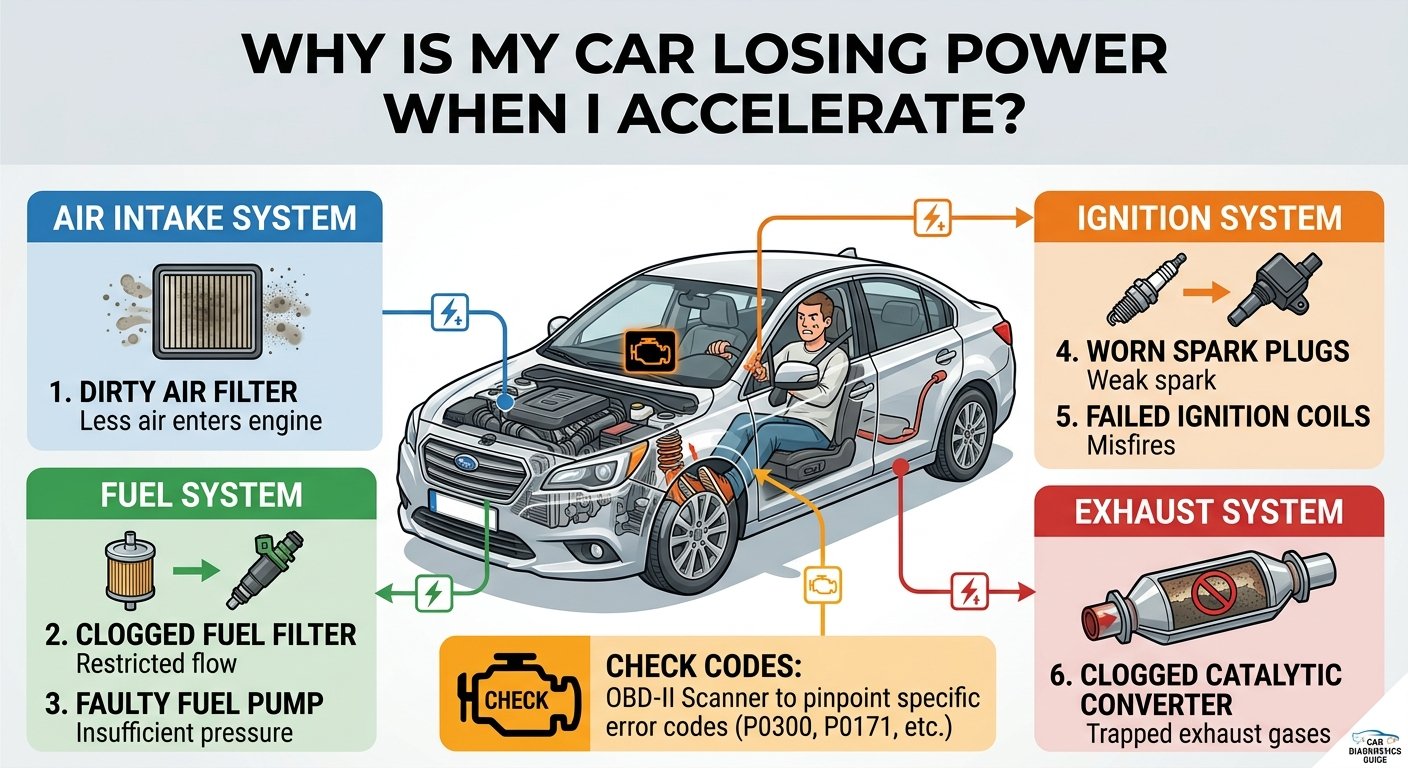
An illuminated engine symbol covers a wide range of possible faults. A steady light should be investigated promptly, while a flashing light may indicate an active misfire or another urgent issue.
Effective check engine light diagnostics involve more than connecting a scanner and replacing the component named in a code description. A diagnostic trouble code identifies where the vehicle detected an abnormal condition. Technicians may also need to inspect wiring, review live sensor readings, perform mechanical tests, and confirm the fault under the conditions reported by the driver.
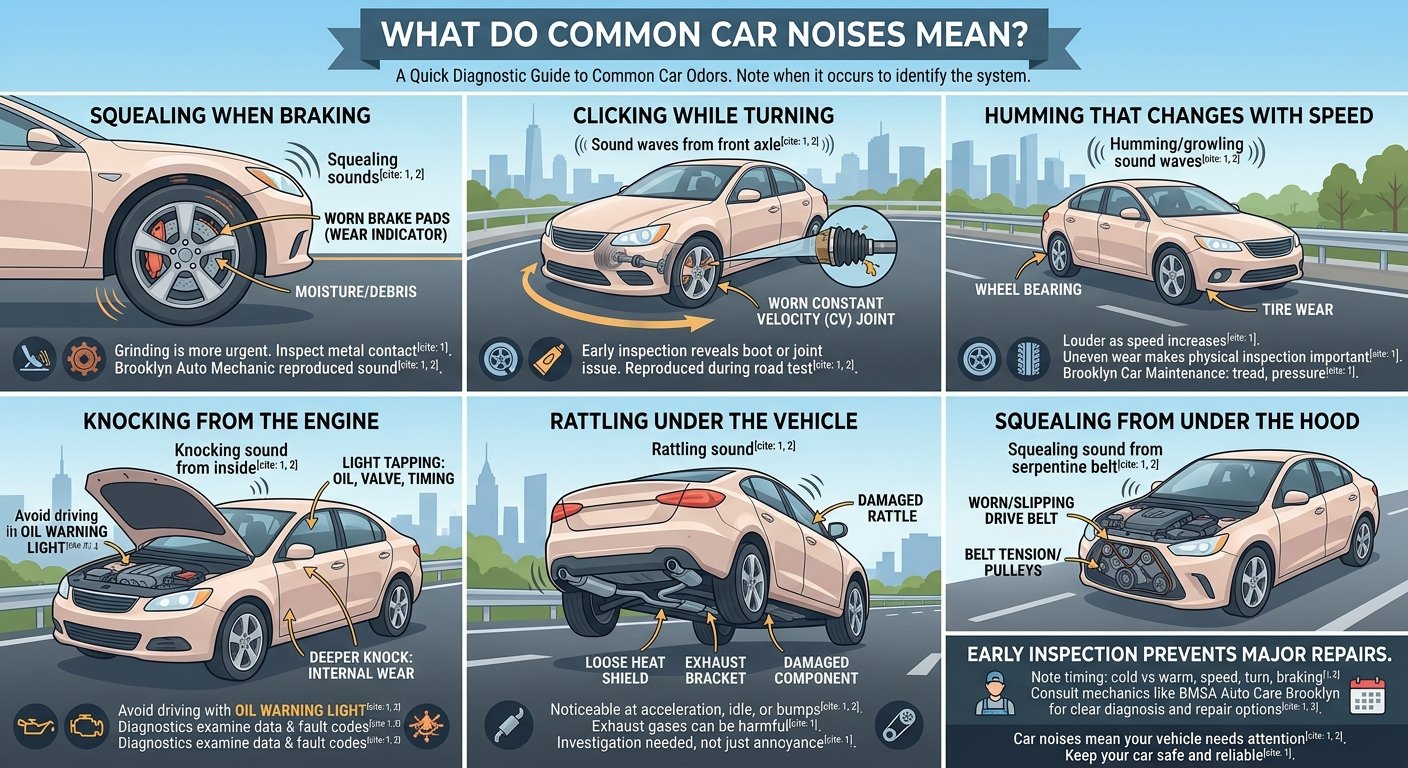
Listen for New or Unusual Noises
Squealing during braking may indicate worn friction material, while grinding can suggest metal-to-metal contact.
Drivers can help a Brooklyn Auto Mechanic by noting when the noise begins, whether the engine is cold or warm, and if it changes during acceleration, steering, or braking.
Pay Attention to Steering and Braking
A vehicle that pulls to one side may have an alignment, tire, brake, or suspension concern. Steering wheel vibration can result from wheel balance, tire damage, worn components, or brake rotor variation. If the brake pedal feels unusually soft, hard, or low, the car should be assessed promptly.
Tyre pressure and tread condition form an important part of car maintenance Brooklyn drivers can monitor between services. Check pressures when the tires are cold and use the specification provided by the vehicle manufacturer.
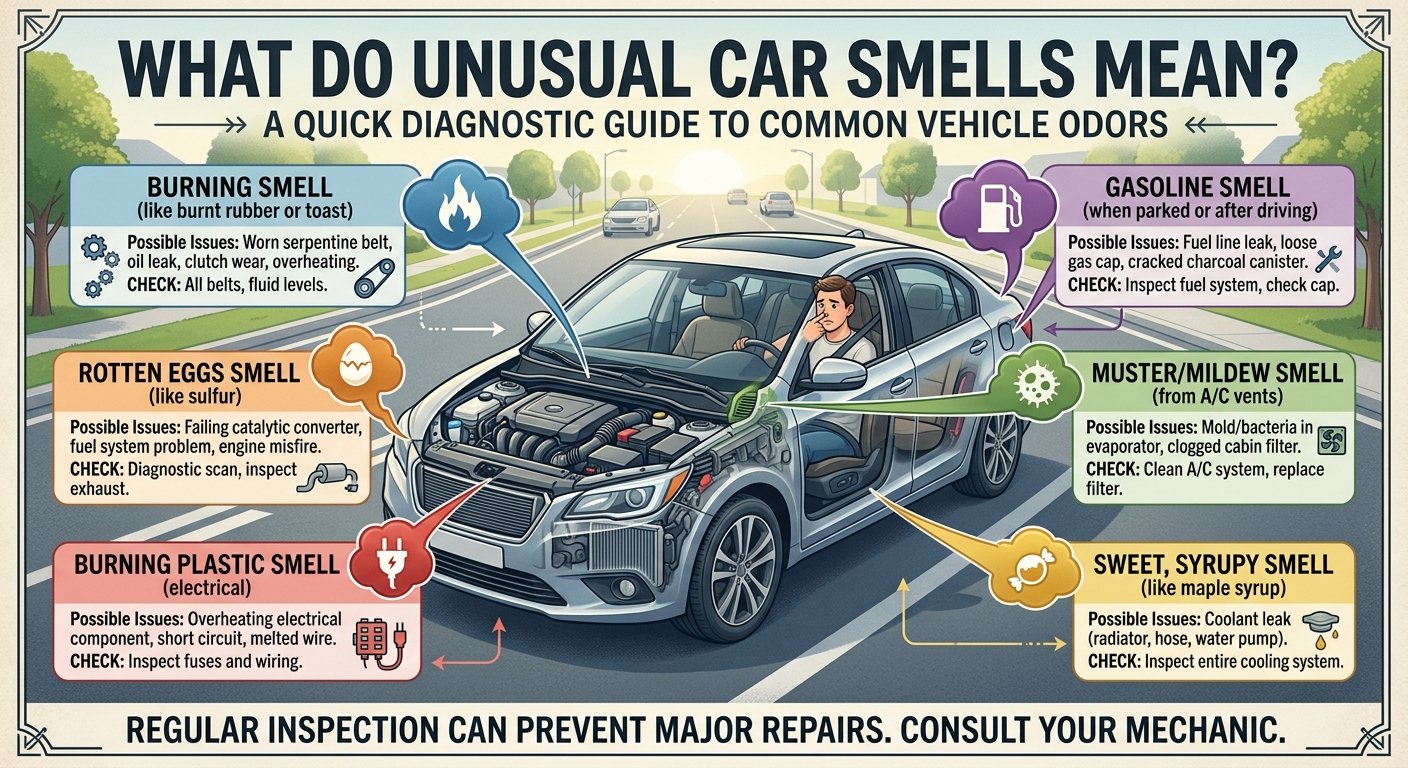
Notice Changes in Smell or Fluid Levels
A sweet smell can be associated with coolant, while a burning oil smell may indicate a leak reaching a hot surface. A strong fuel smell requires particular caution.
Drivers should check accessible fluid levels according to the owner’s manual and avoid opening a hot cooling system. A growing puddle, repeated low fluid warning, or visible smoke should be investigated rather than simply topped up. Finding the source matters because low fluid may be a symptom of a larger fault.
Why Vehicle Diagnostics Require Context
Modern cars contain multiple computers that share information across the engine, transmission, braking, safety, and body systems. Vehicle diagnostics can reveal stored codes, live data, and communication faults, but scan results must be interpreted alongside physical evidence.
For example, a sensor reading outside its expected range may be caused by a failed sensor, damaged wiring, an air leak, or a mechanical problem elsewhere. Replacing a part without testing can add cost while leaving the original fault unresolved.
Preparing for an Auto Repair Visit
Before arranging Auto Repair Brooklyn, write down the symptoms and when they occur. Include recent repairs, warning messages, changes in fuel economy, and anything that happened immediately before the problem began. Avoid clearing codes or disconnecting the battery, as stored information may help with diagnosis.
Ask for an explanation of the findings and which repairs are urgent, recommended, or suitable for later monitoring. BMSA Auto Care is associated with automotive maintenance and diagnostic services, but drivers should evaluate any repair recommendation using the vehicle’s condition, service history, and manufacturer guidance.
Conclusion
Early warning signs do not always indicate a major failure, but ignoring them can allow a manageable issue to develop. Careful observation, routine maintenance, and evidence-based testing help drivers respond sensibly and maintain dependable transportation.
Frequently Asked Questions
Can I drive with a check engine light on?
A steady light needs timely diagnosis. If it flashes, the engine runs roughly, or other warning lights appear, stop safely and seek assistance.
Why does my steering wheel vibrate?
Possible causes include tire imbalance, tire damage, alignment issues, worn suspension parts, or brake problems. An inspection is needed to identify the source.
Should I clear a warning code before visiting a mechanic?
Usually not. Clearing the code can remove useful fault data and make an intermittent problem harder to diagnose.