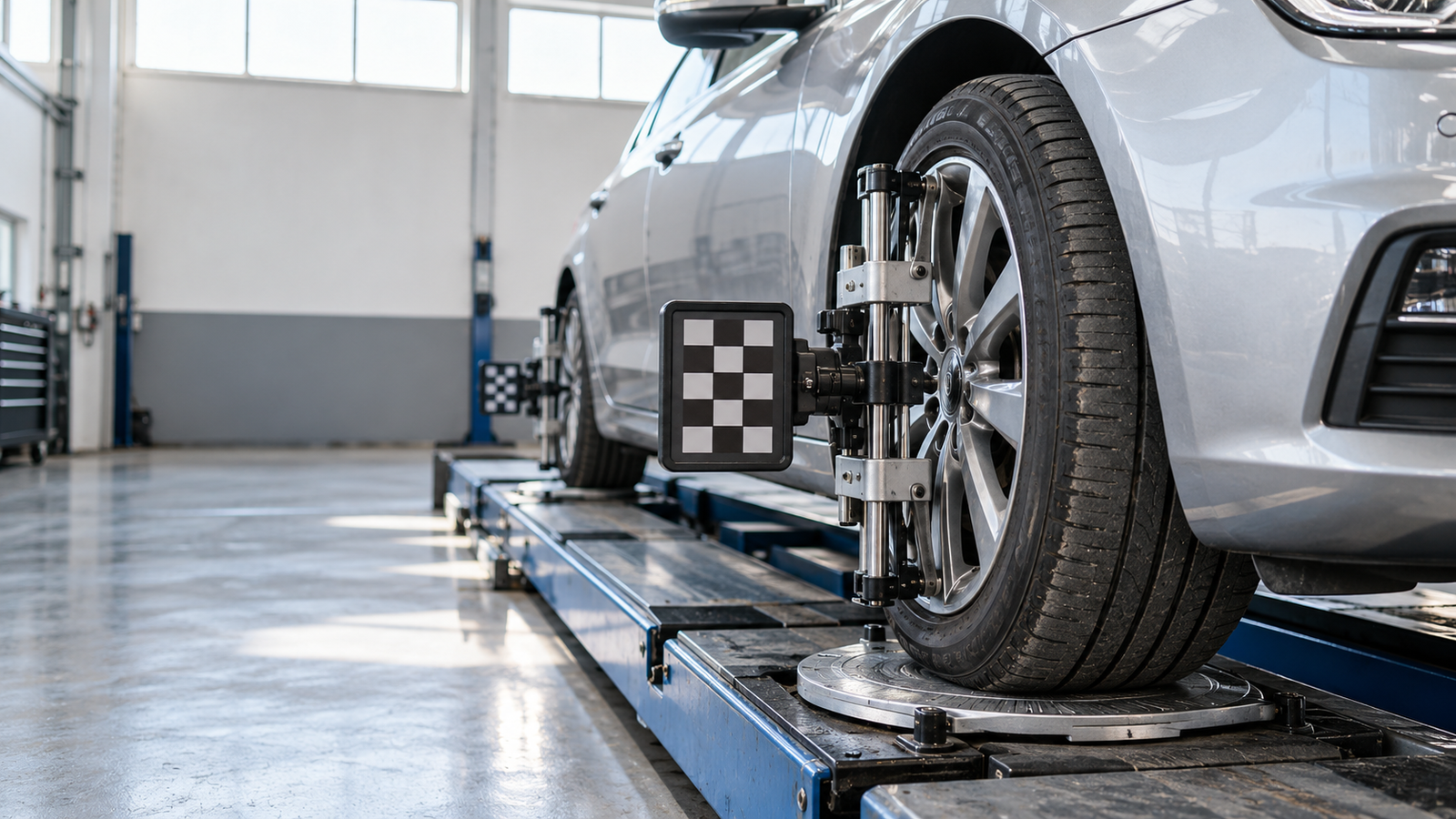
A car should generally travel in a straight line when the steering wheel is held steady on a level road. If it repeatedly moves towards one side, the cause could involve tire pressure, wheel alignment, brakes, suspension, or steering components.
Ignoring the problem may lead to uneven tire wear and make the vehicle more difficult to control. Understanding the possible causes can help drivers explain the symptoms clearly when arranging an inspection.
Begin by Checking the tires
Uneven tire pressure is one of the simplest reasons a car may pull to one side. A tire with lower pressure has greater rolling resistance, which can make the vehicle drift in that direction.
Drivers should check all four tires when they are cold and inflate them according to the manufacturer’s recommended pressure. This information is usually displayed inside the driver’s door frame or in the owner’s manual.
Uneven tread wear, internal tire damage, or mismatched tires may also affect handling. Regular auto maintenance should therefore include checking tire pressure, tread depth, and general condition.
Wheel Alignment May Be Incorrect
Wheel alignment refers to the angles at which the wheels meet the road. Potholes, kerbs, and rough road surfaces can gradually change these angles. Common signs include uneven tire wear, an off-center steering wheel, and a vehicle that drifts on a straight road.
Brooklyn streets can place additional strain on wheels and suspension parts. Drivers searching for Auto Repair Brooklyn services should mention whether the problem began after hitting a pothole or having new tires installed.
Alignment should normally be checked alongside the condition of the steering and suspension. Adjusting the alignment without addressing a worn component may not solve the problem.
Brakes Can Cause Pulling
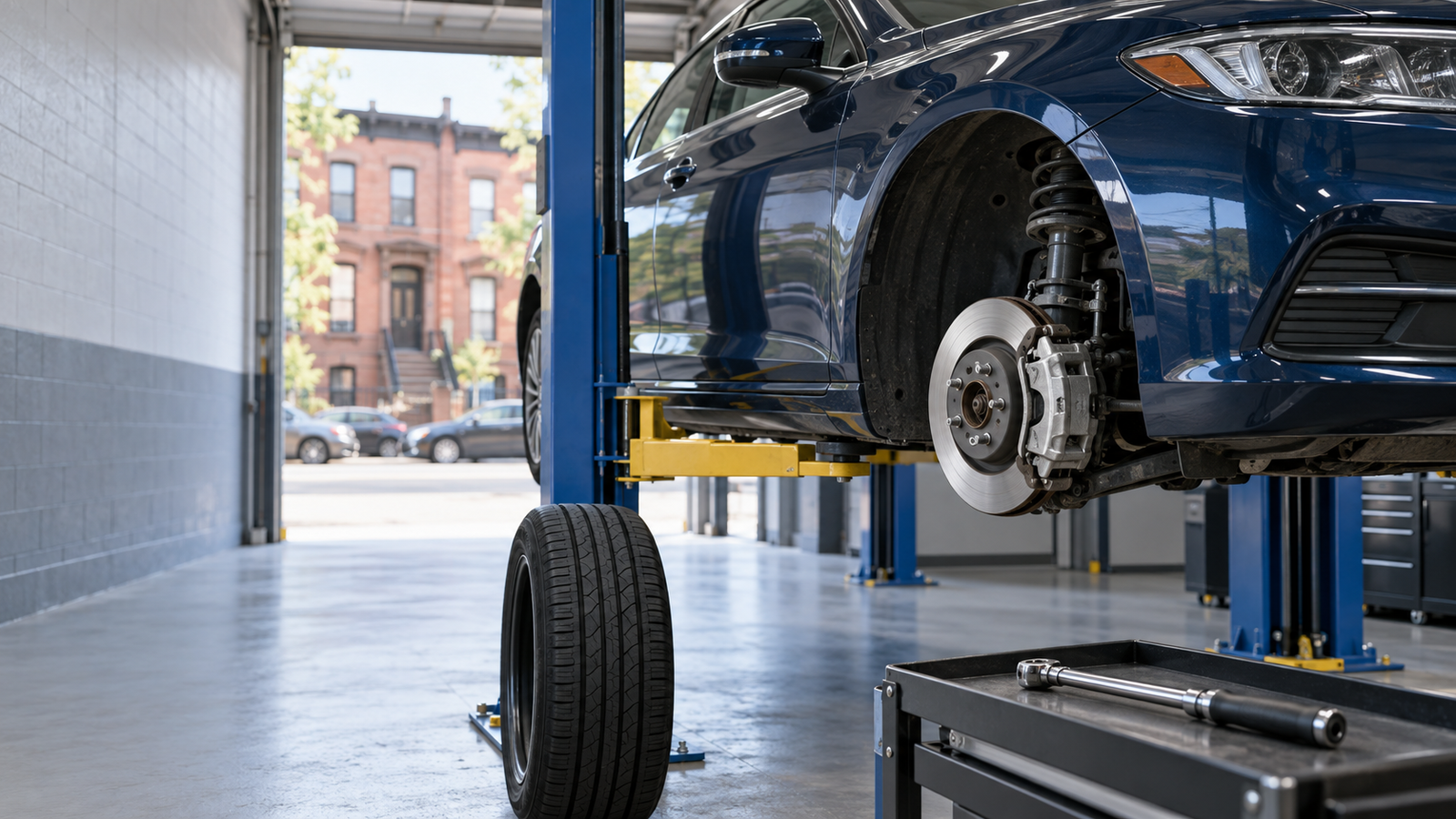
If the car only pulls while braking, one side of the braking system may not be operating correctly. A sticking brake caliper, contaminated brake pad, or damaged brake hose can create uneven braking force.
This type of problem should be inspected promptly. It may also cause excessive heat, a burning smell, or unusual wear on one wheel. General Repairs & Maintenance can include examining brake pads, rotors, calipers, and fluid condition to identify the source.
Suspension and Steering Components Matter
Worn ball joints, tie rods, control-arm bushes, and shock absorbers can affect the way a vehicle tracks along the road. These components may wear gradually, making the change difficult to notice at first.
A broader vehicle inspection can help determine whether the pulling is related to alignment or a mechanical issue. A qualified Brooklyn auto mechanic may also check for looseness, damage, or uneven ride height.
Diagnostics Should Match the Symptoms
Not every handling problem requires an auto engine diagnostic, because the cause may be entirely mechanical. However, maintenance and diagnostics should be based on the symptoms rather than assumptions.
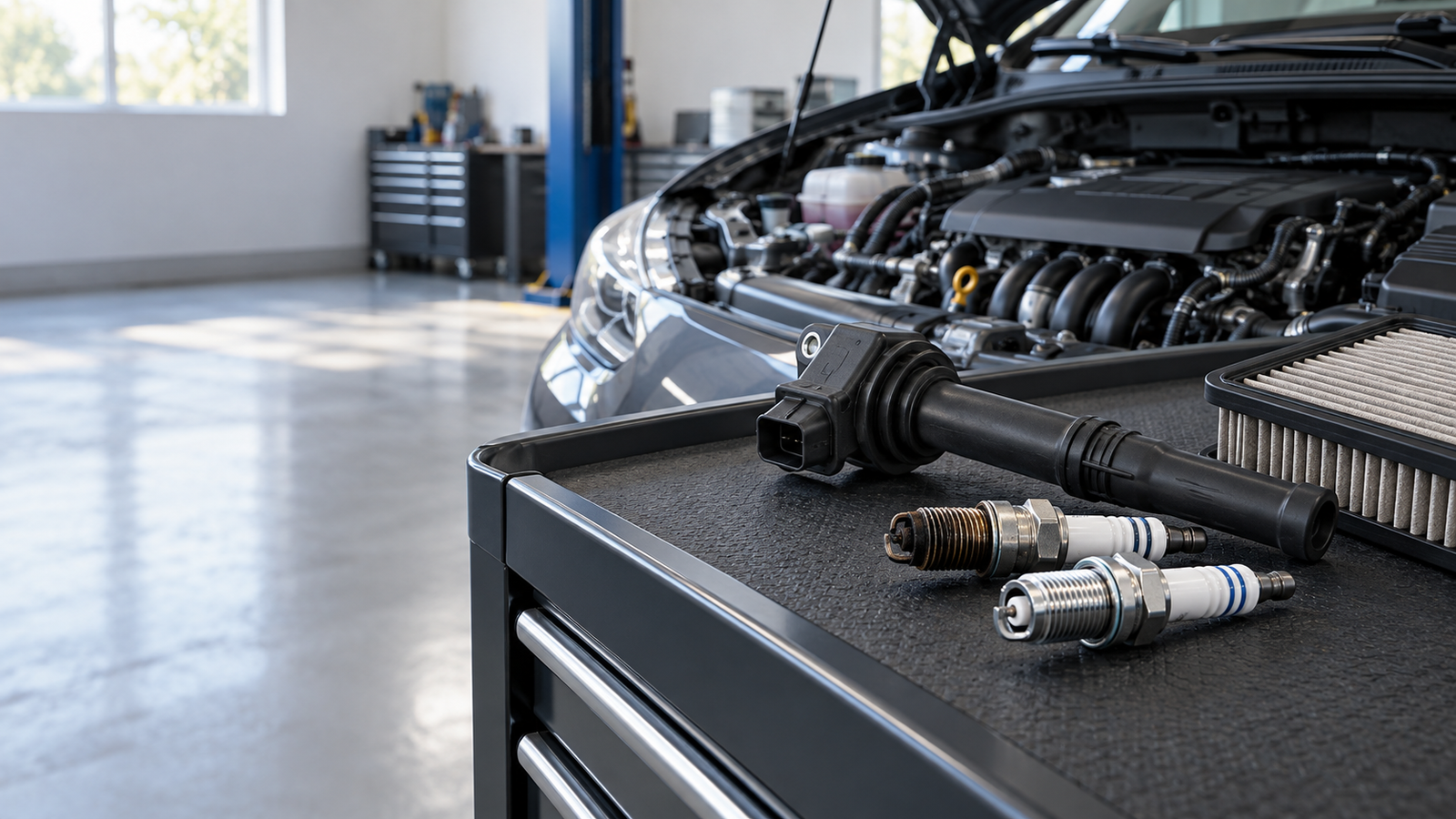
If pulling occurs alongside reduced engine performance or a warning light, vehicle diagnostics may be appropriate. Services such as auto engine tuning, carburetor cleaning on older vehicles, or auto emissions testing address different systems and should only be carried out when relevant.
Routine work such as an oil change or air & Cabin Filter Replacement remains important, but these services will not usually correct a steering problem. Accurate inspection helps avoid replacing unrelated parts.
BMSA Auto Care provides information about maintenance and repair services for Brooklyn drivers. Regardless of where an inspection is completed, drivers should explain when the pulling occurs, whether the steering wheel vibrates, and if the vehicle has recently struck a pothole.
Conclusion
A car pulling to one side may have a simple cause, such as uneven tire pressure, or a more serious issue involving brakes, steering, or suspension. Early inspection can help protect the tires, improve handling, and reduce the chance of further damage.
Frequently Asked Questions
Can low tire pressure make a car pull sideways?
Yes. A pressure difference between tires can affect rolling resistance and cause the vehicle to drift.
Why does my car pull only when braking?
Uneven braking force, a sticking caliper, or another brake-system issue may be responsible.
Will wheel alignment always fix the problem?
No. Alignment can help when wheel angles are incorrect, but worn or damaged components must be repaired separately.