If your car starts shaking while driving or idling, it is usually a sign that something is not working as smoothly as it should. The cause might be as simple as an unbalanced tire, or it could involve the engine, brakes, suspension, transmission, or another important vehicle system.
The way the vibration feels—and when it happens—can provide useful clues. A car that shakes while stopped at a traffic light may have a very different problem from one that vibrates only at highway speeds.
Understanding the common causes can help you know when it is time to schedule a professional inspection.
Why Is My Car Shaking?
A vehicle contains hundreds of moving components that are designed to operate smoothly together. When a tire becomes unbalanced, an engine cylinder begins misfiring, a suspension component wears out, or another part develops a problem, you may feel that movement through the steering wheel, seat, pedals, or entire vehicle.
The most important clue is often when the shaking happens.
Does your vehicle shake while idling? Only during acceleration? At highway speeds? When braking? Each situation can point technicians toward different components.
1. Engine Misfire
An engine misfire is one of the most common reasons a vehicle may shake while idling or accelerating.
Your engine relies on each cylinder producing combustion at the correct time. If one cylinder fails to operate properly, the engine may become noticeably rough or unbalanced.
Misfires can result from worn spark plugs, faulty ignition coils, fuel injector problems, vacuum leaks, sensor issues, or internal engine problems.
You may also notice a check-engine light, reduced acceleration, poor fuel economy, or a rough engine sound.
A flashing check-engine light combined with severe shaking should be inspected promptly.
2. Worn Spark Plugs
Spark plugs ignite the air-fuel mixture inside the engine cylinders.
As spark plugs become worn or contaminated, they may struggle to create a consistent spark. This can lead to rough idling, hesitation, misfires, and noticeable vibration.
If your vehicle shakes while stopped but becomes smoother once you begin driving, the ignition system is one area worth inspecting.
Regular maintenance and timely spark plug replacement can help prevent these performance problems.
3. Faulty Engine or Transmission Mounts
Engine mounts and transmission mounts secure the powertrain to the vehicle while absorbing vibration.
When a mount becomes damaged, cracked, or worn, more engine vibration may transfer directly into the cabin.
You may notice particularly strong shaking when the vehicle is idling, placed into Drive, accelerating from a stop, or shifting between gears.
A technician can inspect the mounts to determine whether excessive movement is occurring.
4. Unbalanced Tires
If your car shakes mainly at higher speeds, tire balance is a common possibility.
Even a relatively small difference in wheel weight can create noticeable vibration as the tire rotates faster.
The shaking often becomes more noticeable between approximately 50 and 70 mph and may be felt through the steering wheel or seat.
Professional wheel balancing can determine whether one or more tires need adjustment.
5. Uneven or Damaged Tires
Tire problems are another frequent cause of vehicle vibration.
Uneven tread wear, tire damage, bulges, flat spots, incorrect pressure, or internal tire defects can all make the vehicle feel unstable.
Brooklyn streets, potholes, curb impacts, and rough road surfaces can be particularly hard on tires and wheels.
If the vibration increases with vehicle speed, having your tires inspected is a good place to start.
6. Wheel Alignment Problems
Poor wheel alignment can cause the vehicle to pull to one side, wear tires unevenly, and sometimes contribute to steering vibration.
Wheel alignment can be affected by potholes, curb impacts, worn suspension parts, or normal wear over time.
If your steering wheel sits off-center or your tires show unusual tread wear along with the shaking, the alignment and suspension should be inspected.
7. Brake Rotor Problems
If your car shakes primarily when you press the brake pedal, the braking system may be responsible.
Brake rotors can develop uneven surfaces or thickness variations over time. When the brake pads contact an uneven rotor, you may feel pulsation through the brake pedal or vibration through the steering wheel.
Other braking components, including calipers and suspension parts, can create similar symptoms.
Because braking directly affects vehicle safety, vibration during braking should not be ignored.
8. Steering or Suspension Problems
Your steering and suspension systems keep the vehicle stable while maintaining proper tire contact with the road.
Worn components such as tie rods, ball joints, control arms, bushings, shocks, or struts can result in vibration, clunking noises, loose steering, or poor handling.
You may notice the symptoms become worse when driving over bumps, turning, or traveling on uneven roads.
A complete steering and suspension inspection can help identify worn components before they create larger problems.
9. Driveshaft or CV Axle Problems
If the shaking becomes stronger during acceleration, components that transfer power to the wheels may need attention.
A damaged CV axle, worn CV joint, driveshaft problem, or related drivetrain issue can create vibration when power is applied.
You may also hear clicking, knocking, or clunking noises while turning or accelerating.
These symptoms should be inspected because drivetrain problems can become more severe over time.
10. Fuel or Air Delivery Problems
Your engine needs the correct balance of fuel and air to run smoothly.
Dirty fuel injectors, a faulty mass airflow sensor, vacuum leaks, restricted air intake, or fuel-pressure problems can disrupt combustion and cause rough operation.
The vehicle may shake at idle, hesitate during acceleration, lose power, or experience reduced fuel economy.
Professional engine diagnostics can help determine whether the problem is mechanical, electrical, ignition-related, or fuel-related.
Why Does My Car Shake While Idling?
If your vehicle shakes while stopped at a traffic light or sitting in Park, the engine is often the first area technicians investigate.
Possible causes include engine misfires, worn spark plugs, ignition coil problems, dirty fuel injectors, vacuum leaks, poor engine mounts, or airflow problems.
A small amount of engine vibration can be normal, but noticeable shaking that has recently developed deserves attention.
Why Does My Car Shake at Highway Speeds?
If your vehicle is smooth around town but begins vibrating at higher speeds, tires and wheels become more likely suspects.
Unbalanced tires, damaged wheels, uneven tread wear, alignment issues, or suspension problems may produce vibration that increases as vehicle speed rises.
Because these problems can also accelerate tire wear, having the vehicle inspected early can save money over time.
Why Does My Steering Wheel Shake?
A shaking steering wheel often indicates that the vibration is coming from the front of the vehicle.
Possible causes include front tire imbalance, wheel damage, alignment problems, worn steering components, suspension wear, or brake rotor problems.
When the vibration happens is important. Shaking only while braking may suggest a brake issue, while shaking primarily at highway speeds may point more toward tires or wheels.
Why Does My Car Shake When I Accelerate?
Vibration under acceleration may indicate an engine misfire, worn engine mount, damaged CV axle, driveshaft issue, or another drivetrain problem.
If the vehicle also loses power, hesitates, or displays a check-engine light, professional diagnostic testing should be performed.
Continuing to drive with severe vibration can sometimes place additional stress on surrounding components.
Is It Safe to Drive a Car That Is Shaking?
It depends on the severity and cause.
A mild vibration caused by an unbalanced tire may not require you to immediately stop driving, but it should still be inspected.
More severe shaking—particularly when combined with steering problems, braking problems, unusual noises, warning lights, overheating, or power loss—can indicate a more serious issue.
If the vehicle suddenly becomes difficult to control or the shaking is severe, stop driving when it is safe to do so and arrange for professional assistance.
How Is Vehicle Shaking Diagnosed?
Because many different problems can cause similar vibrations, diagnosis usually begins by determining exactly when the shaking occurs.
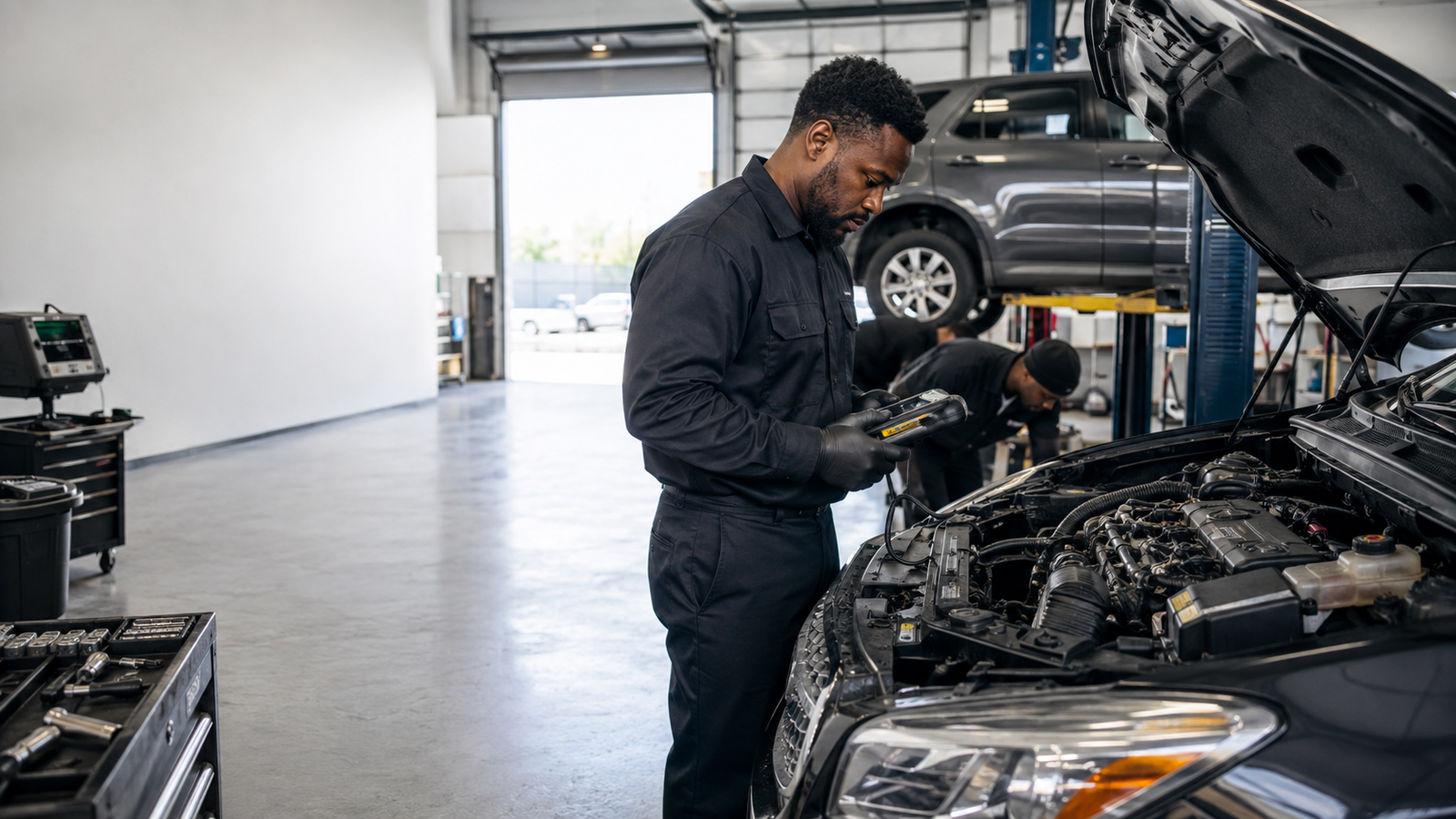
A technician may inspect the engine, tires, wheels, brakes, steering, suspension, drivetrain, ignition system, and computer diagnostic codes depending on the symptoms.
Useful details to tell your mechanic include whether the vibration occurs while idling, accelerating, braking, turning, or driving at a particular speed.
The more accurately the symptoms can be reproduced, the easier it is to identify the actual source.
Don’t Ignore New Vehicle Vibrations
A vehicle that suddenly begins shaking is telling you that something has changed.
Sometimes the solution is straightforward, such as balancing the tires or replacing worn spark plugs. In other cases, vibration may be an early warning of brake, suspension, drivetrain, or engine problems.
Having the issue diagnosed early can help prevent unnecessary wear and more expensive repairs later.
Car Shaking or Vibrating in Brooklyn?
If your car is shaking while driving or idling in Brooklyn, BMSA Auto Care can inspect your vehicle and determine what is causing the vibration.
From engine diagnostics and ignition problems to tires, brakes, wheel alignment, suspension, steering, and drivetrain concerns, our team can identify the underlying issue and recommend the appropriate repair.
Get Your Vehicle Inspected
Don’t wait for a small vibration to develop into a larger mechanical problem. Contact BMSA Auto Care to schedule an inspection and get your vehicle running smoothly again.