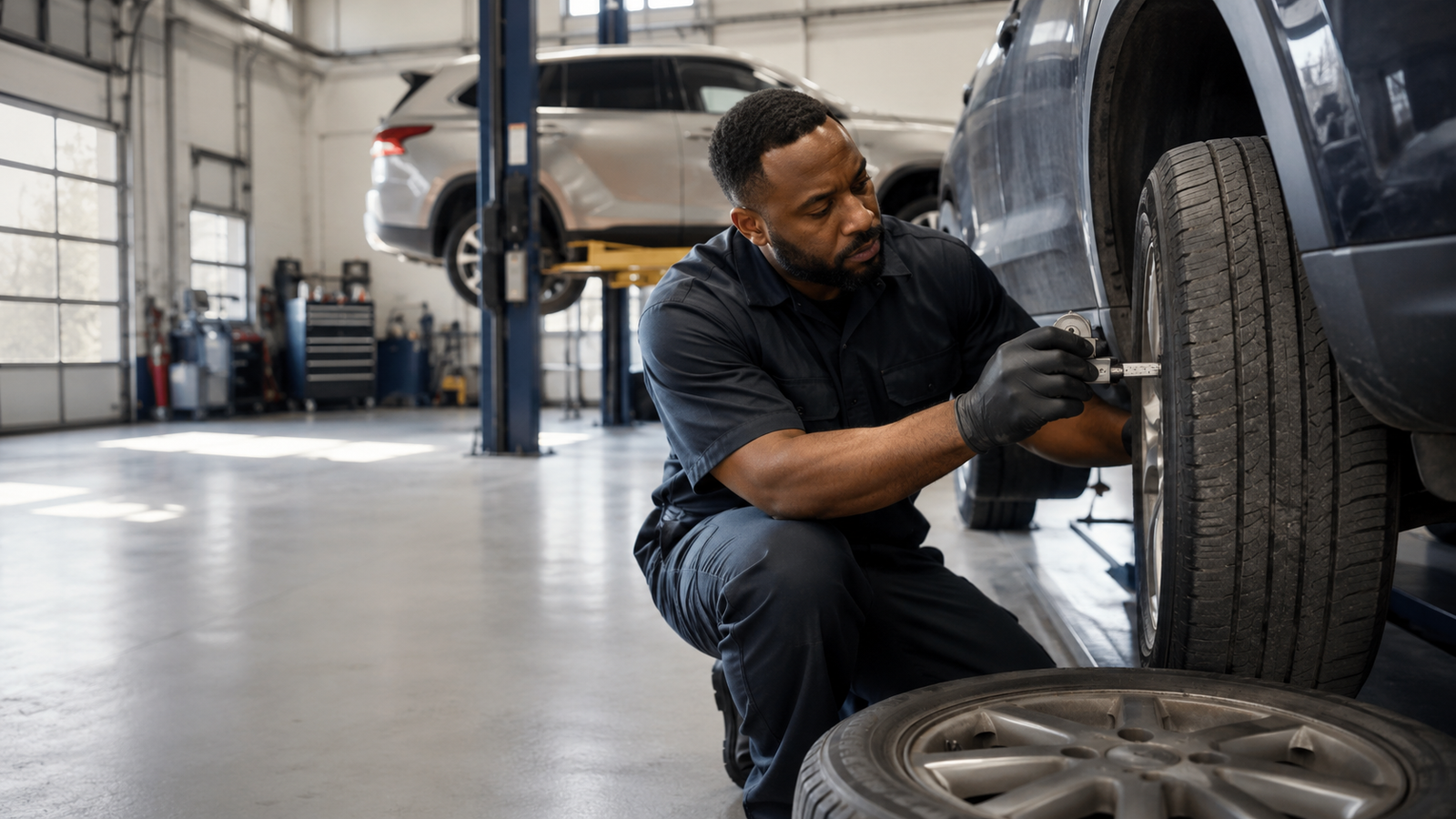
Your tires are one of the most important safety components on your vehicle. They are the only parts of your car that stay in direct contact with the road, which means worn or damaged tires can affect braking, handling, traction, fuel efficiency, and overall driving safety.
The problem is that tire wear often happens gradually. Many drivers do not realise how worn their tires have become until traction decreases, the vehicle begins vibrating, or a tire develops visible damage.
Knowing the warning signs can help you replace your tires before they become unsafe. Below are the most common signs that it may be time for tire replacement.
Why Tire Condition Matters
Healthy tires help your vehicle maintain traction during acceleration, braking, cornering, and wet-weather driving.
As tread wears down, your tires become less effective at moving water away from the contact surface. This can increase stopping distance and raise the risk of hydroplaning.
Damaged or severely worn tires can also contribute to:
- Reduced steering control
- Poor wet-weather traction
- Increased stopping distance
- Tire blowouts
- Uneven handling
- Reduced fuel efficiency
- Excessive vibration
Regular tire inspections can help identify problems before they become serious.
1. Your Tire Tread Is Too Low
Tread depth is one of the clearest indicators that your tires may need replacement.
Tire tread contains grooves designed to maintain traction and move water away from the road surface. As the tread wears down, the tire becomes less effective—especially in rain.
Many tires include built-in tread wear indicators. These are small raised bars located inside the tread grooves.
When the tread surface becomes level with these bars, the tire has reached its wear limit and should be replaced.
2. The Penny Test Shows Low Tread
A simple way to get a rough idea of tread depth is the penny test.
Insert a penny into the tire tread with Lincoln’s head facing downward.
If you can see the top of Lincoln’s head completely, the tread may be very worn and the tire should be professionally inspected.
While this can be a useful quick check, a proper tread-depth gauge provides a more accurate measurement.
3. You See Cracks in the Sidewall
The sidewall is the outer surface of the tire between the tread and wheel.
Over time, rubber can dry out and develop cracks because of:
- Age
- Heat
- Sun exposure
- Weather
- Chemical exposure
- Long periods of inactivity
Small surface marks may not always mean immediate replacement is necessary, but deep cracks or widespread deterioration should be inspected.
Sidewall damage can weaken the structure of the tire.
4. There Is a Bulge or Bubble in the Tire
A bulge or bubble on the sidewall can indicate internal tire damage.
This may happen after hitting:
- A pothole
- A curb
- Road debris
- Another hard object
A bulge means the tire’s internal structure may have weakened, allowing air pressure to push outward.
Unlike some minor tread punctures, a sidewall bulge generally cannot be safely repaired.
A tire with a visible bulge should be replaced as soon as possible.
5. Your Tires Are Wearing Unevenly
Uneven tire wear is another important warning sign.
You may notice more wear on:
- The inside edge
- The outside edge
- The centre
- One section of the tread
- One tire compared with the others
Uneven wear can be caused by:
- Wheel alignment problems
- Incorrect tire pressure
- Suspension problems
- Lack of tire rotation
- Wheel balancing issues
Replacing the tire may solve the immediate problem, but the underlying cause should also be corrected to prevent the new tire from wearing prematurely.
6. Your Vehicle Vibrates While Driving
Some vibration is normal depending on road conditions, but noticeable shaking—especially at highway speeds—can indicate a tire or wheel problem.
Possible causes include:
- Unbalanced tires
- Damaged tires
- Bent wheels
- Uneven tread wear
- Alignment problems
- Suspension issues
If the vibration becomes stronger as speed increases, have the tires and wheels inspected.
Ignoring vibration can lead to additional tire and suspension wear.
7. Your Tire Keeps Losing Air
Tires naturally lose small amounts of pressure over time, but frequent air loss usually indicates a problem.
Common causes include:
- Nail or screw puncture
- Valve stem leak
- Wheel bead leak
- Cracked wheel
- Sidewall damage
- Internal tire damage
Some tread punctures can be repaired safely. Sidewall damage, larger punctures, or structural issues may require tire replacement.
If one tire repeatedly needs air, it should be inspected rather than continuously topped off.
8. The Tire Has Visible Cuts or Damage
Inspect your tires occasionally for:
- Deep cuts
- Exposed cords
- Missing chunks of rubber
- Large punctures
- Sidewall tears
- Embedded objects
Severe visible damage can weaken the tire and increase the risk of sudden failure.
If the internal cords or belts are visible, the tire should not continue to be used.
9. Your Tires Are Old
Tires can deteriorate even if they still have visible tread.
Rubber changes with age, heat, weather, and environmental exposure.
The exact replacement interval varies depending on the tire manufacturer, vehicle, storage conditions, and driving habits. Tire age should therefore be considered alongside tread depth and overall condition.
You can find the tire’s manufacturing date in the DOT code printed on the sidewall.
The final four digits indicate the week and year of manufacture.
For example:
2523 means the tire was manufactured during the 25th week of 2023.
Older tires should be professionally inspected even if they appear to have adequate tread.
10. Your Vehicle Has Poor Traction
If your vehicle begins losing traction more easily than it used to, worn tires may be responsible.
You may notice:
- Wheel spin during acceleration
- Reduced grip in rain
- Longer braking distances
- Sliding during turns
- Poor stability on wet roads
These symptoms can become especially noticeable during bad weather.
Tires should provide predictable grip. If they no longer do, replacement may be necessary.
How Long Do Tires Usually Last?
There is no single mileage number that applies to every tire.
Tire life depends on factors such as:
- Tire quality
- Driving habits
- Vehicle weight
- Road conditions
- Alignment
- Tire pressure
- Rotation frequency
- Climate
- Suspension condition
A driver who regularly encounters potholes, rough roads, heavy traffic, or aggressive braking may wear tires faster than someone driving mostly on smooth highways.
That is why regular inspections are more useful than relying on mileage alone.
How Often Should You Check Your Tires?
It is a good idea to visually inspect your tires regularly and check the air pressure at least once a month.
Also inspect them before:
- Long road trips
- Winter driving
- Heavy rain
- Carrying heavy loads
Professional tire inspections during oil changes and routine maintenance can help identify problems that are easy to miss.
Should You Replace All Four Tires at Once?
Not always.
Whether you need one, two, or four tires depends on:
- Remaining tread depth
- Vehicle drive train
- Tire condition
- Tire type
- Manufacturer recommendations
On some all-wheel-drive vehicles, large differences in tire circumference can affect the drive train.
A technician can measure your remaining tread and recommend the safest replacement strategy.
Can a Damaged Tire Be Repaired Instead of Replaced?
Some punctures can be repaired.
A small puncture located in the central tread area may be repairable if the tire has not been driven while flat and the internal structure remains undamaged.
Tires generally should not be repaired when damage involves:
- The sidewall
- The shoulder
- Large punctures
- Exposed cords
- Bulges
- Severe cracking
A technician should inspect the tire before deciding whether repair is safe.
Why Tire Pressure Matters
Driving with incorrect tire pressure can accelerate wear.
Underinflated tires may wear more heavily along the outer edges and generate excess heat.
Overinflated tires may wear faster in the centre and provide less road contact.
Proper inflation helps improve:
- Tire life
- Handling
- Fuel efficiency
- Braking
- Ride comfort
Use the tire pressure listed by the vehicle manufacturer, usually found on the driver’s door jamb—not the maximum pressure printed on the tire itself.
How Can You Make Your Tires Last Longer?
Good maintenance can help extend tire life.
Important habits include:
- Maintain correct tire pressure
- Rotate tires regularly
- Have your wheel alignment checked
- Avoid aggressive acceleration and braking
- Inspect tires after hitting potholes
- Repair suspension problems promptly
- Keep wheels properly balanced
Small maintenance steps can prevent premature wear and reduce the cost of replacing tires too frequently.
Tire Replacement in Brooklyn
If you’re unsure whether your tires are still safe, BMSA Auto Care can inspect the tread, sidewalls, tire pressure, wear pattern, and overall condition.
Our team can help determine whether your tires can continue to be used, need repair, or should be replaced.
We also provide tire rotations, wheel alignment, suspension services, brake inspections, and other vehicle maintenance for Brooklyn drivers.
Get Your Tires Checked
Don’t wait until worn tires begin affecting braking or handling.
Contact BMSA Auto Care to schedule a tire inspection and make sure your vehicle has the traction and stability it needs for safe driving.