Regular auto maintenance helps a vehicle remain safe, efficient, and dependable. It also gives drivers an opportunity to identify worn components before they contribute to a breakdown or more extensive damage. A sensible maintenance plan should consider manufacturer recommendations, vehicle age, mileage, and the conditions in which the car is normally driven.
Follow the Vehicle’s Maintenance Schedule
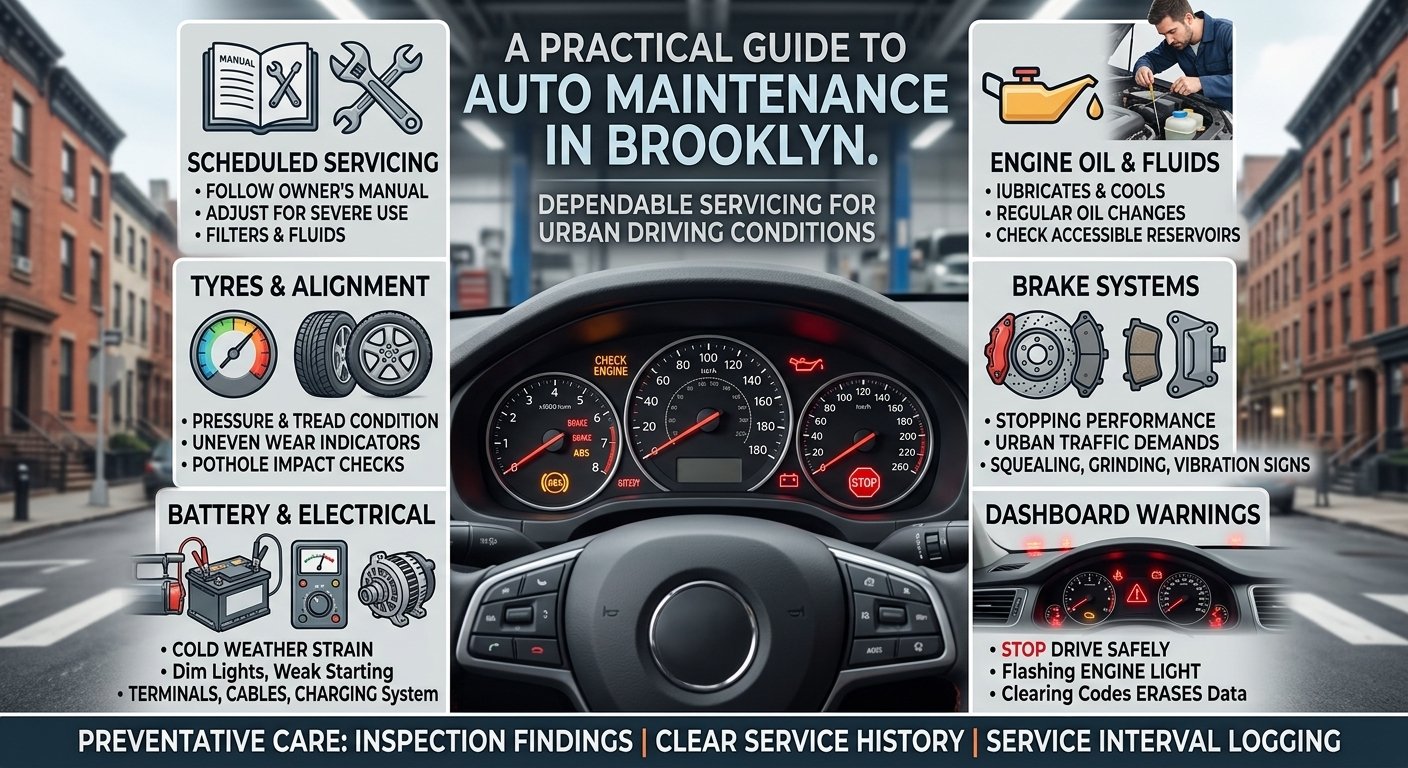
The owner’s manual provides service intervals for important items such as engine oil, filters, fluids, spark plugs, and drive belts. Some vehicles also display maintenance reminders based on mileage or operating conditions.
Brooklyn driving can involve short journeys, congestion, frequent stops, and extended idling. These conditions may fall under severe or demanding use in some maintenance schedules.
Engine Oil and Fluid Checks
Engine oil lubricates moving components, helps manage heat, and carries contaminants toward the filter. Oil gradually degrades, so it should be changed using the grade and interval specified for the vehicle. A warning light, visible leak, or unexplained drop in level should be investigated instead of repeatedly topping up the oil.
Other fluids support the cooling, braking, steering, and transmission systems. Drivers can check accessible reservoirs according to the owner’s manual but should never open a hot cooling system.
Tyres, Alignment, and Suspension
Tyres connect the vehicle to the road, making pressure and tread condition important for braking, steering, and stability. Pressures should be checked when the tyre is cold and adjusted to the manufacturer’s specification. Uneven wear may indicate incorrect pressure, wheel misalignment, or worn suspension components.
Potholes and curb impacts can damage tires or wheels and alter alignment. New vibration, pulling, an off center steering wheel, or a sidewall bulge should not be ignored. A Brooklyn auto mechanic can examine related components together rather than treating the tire as an isolated issue.
Brake Maintenance and Warning Signs
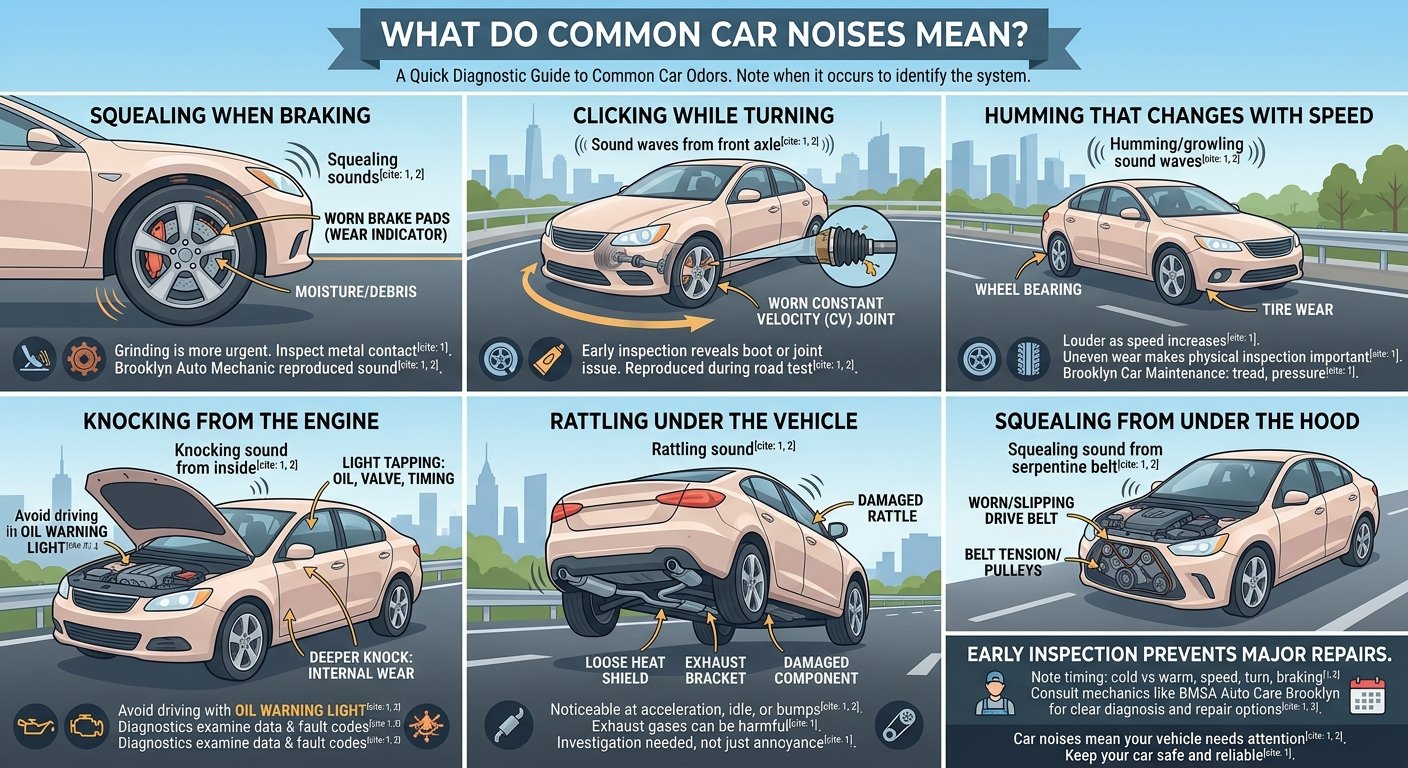
Urban traffic places frequent demands on brakes. Brake pads, rotors, calipers, and fluid all contribute to stopping performance, although they do not necessarily wear at the same rate. Squealing, grinding, vibration, increased stopping distance, or a change in pedal feel requires attention.
Drivers should avoid judging brake condition only by mileage because driving style, traffic, and component quality affect wear.
Battery and Electrical System Care
Repeated short journeys can make it difficult for a battery to recover the energy used when starting the engine. Cold weather, age, and electrical accessories can add further strain. Slow cranking, dim lights, or intermittent electrical behavior may suggest a weak battery or charging system problem.
Battery testing can measure condition, but the terminals, cables, and alternator should also be considered.
Responding to Dashboard Warning Lights
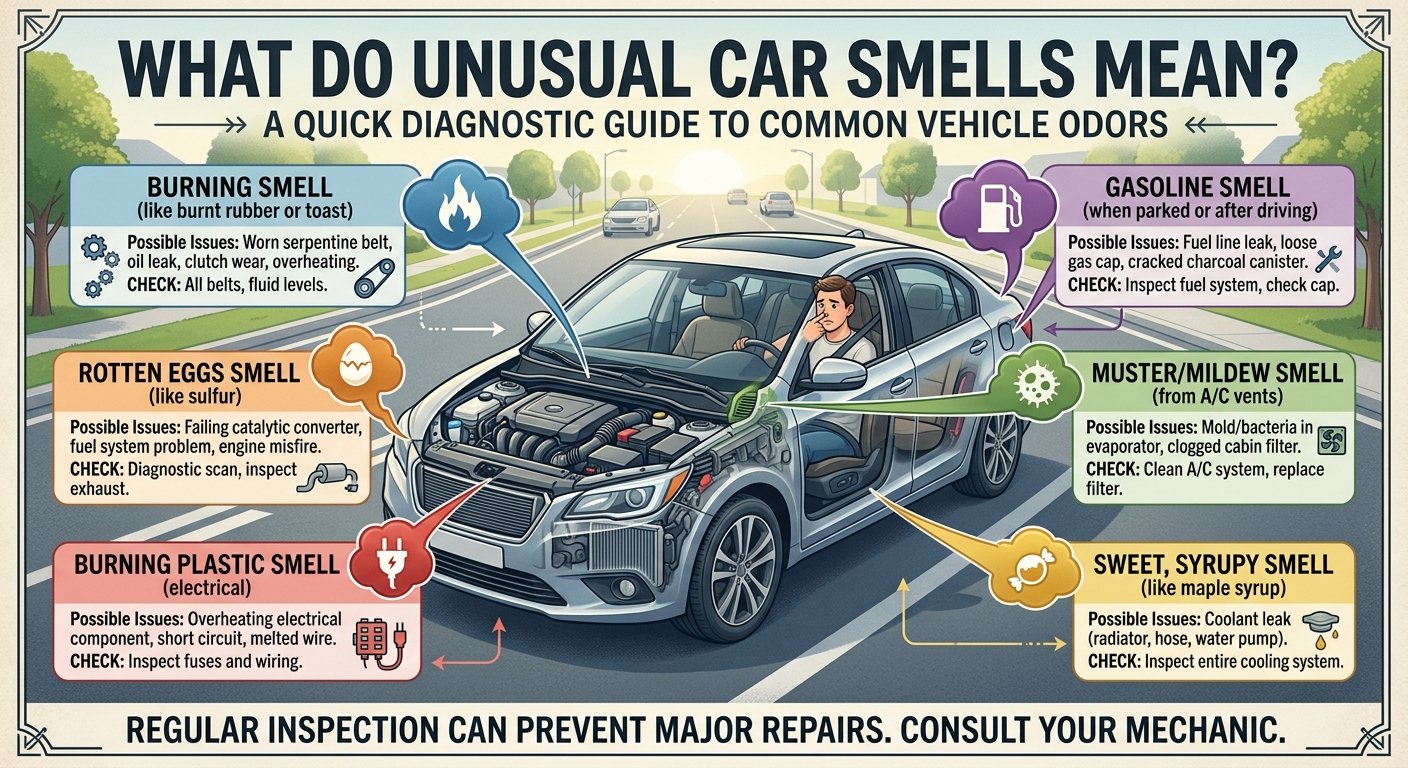
A dashboard light should be interpreted according to its color, symbol, and the vehicle’s behavior. Red oil pressure, brake, or overheating warnings may require the driver to stop safely. A flashing engine light can also indicate a fault that risks additional damage.
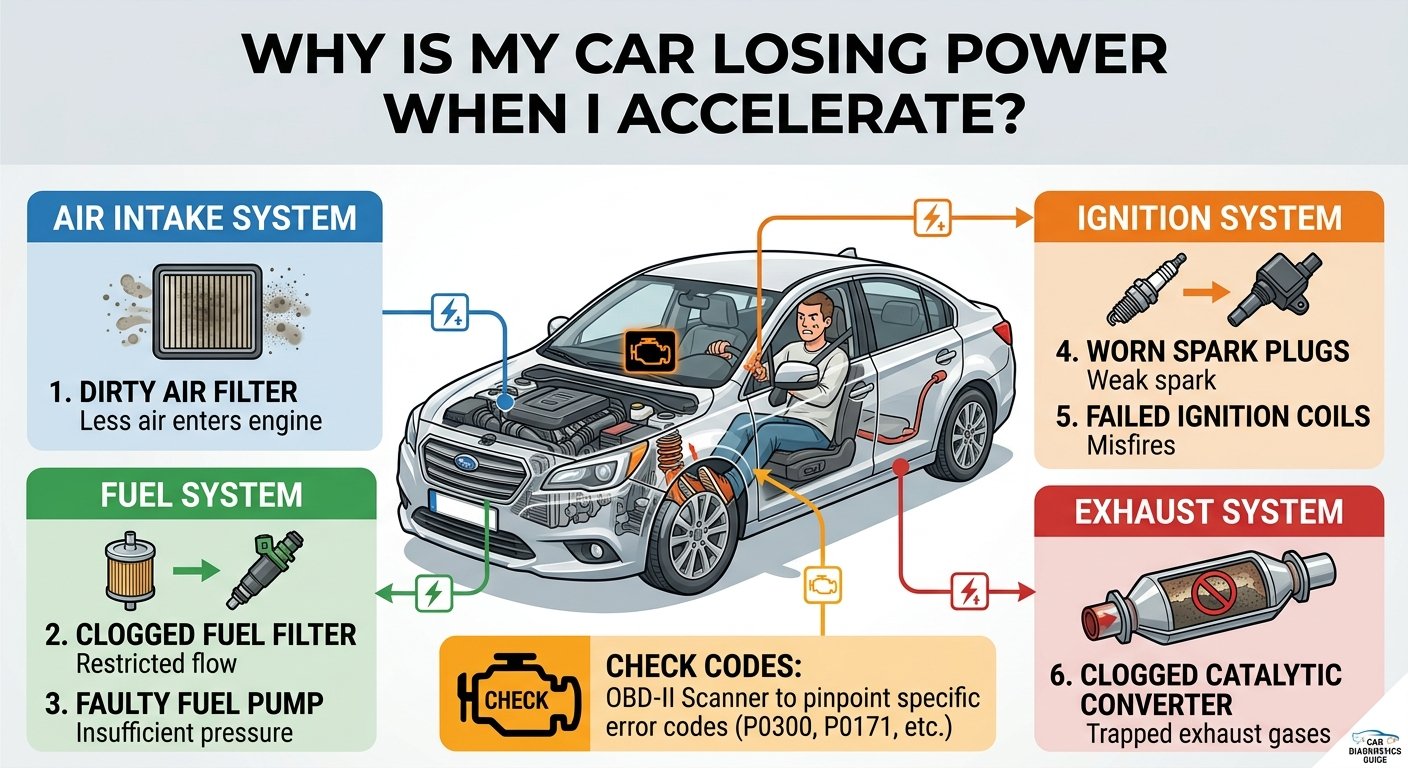
Accurate testing may involve scan data, wiring checks, mechanical measurements, and confirmation that the recommended repair addresses the cause. Clearing a warning code before an inspection can erase information that would help diagnosis.
Keeping Useful Service Records
Keep invoices, inspection reports, and details of replaced parts. A clear history helps technicians recognize recurring problems, confirms which maintenance has been completed, and may support the vehicle’s resale value.
When arranging auto repair in Brooklyn, drivers should describe symptoms precisely. Note when the issue occurs, whether the engine is hot or cold, and whether braking, turning, or acceleration affects it. BMSA Auto Care is connected with vehicle maintenance and repair, but drivers should evaluate recommendations using inspection findings, service history, and manufacturer guidance.
Conclusion
Effective auto maintenance combines scheduled servicing with attention to new symptoms. Checking the condition of tyres, fluids, brakes, lights, and battery between services can reveal developing problems.
Frequently Asked Questions
How often should a car receive maintenance?
Follow the schedule in the owner’s manual, adjusting for age, mileage, and demanding driving conditions where recommended.
Does low mileage reduce maintenance needs?
Not always. Fluids, rubber components, and batteries can deteriorate with time, while short trips may create additional strain.
Should every dashboard light be treated as urgent?
Urgency varies. Consult the owner’s manual, and stop driving safely when a red warning or serious performance problem appears.