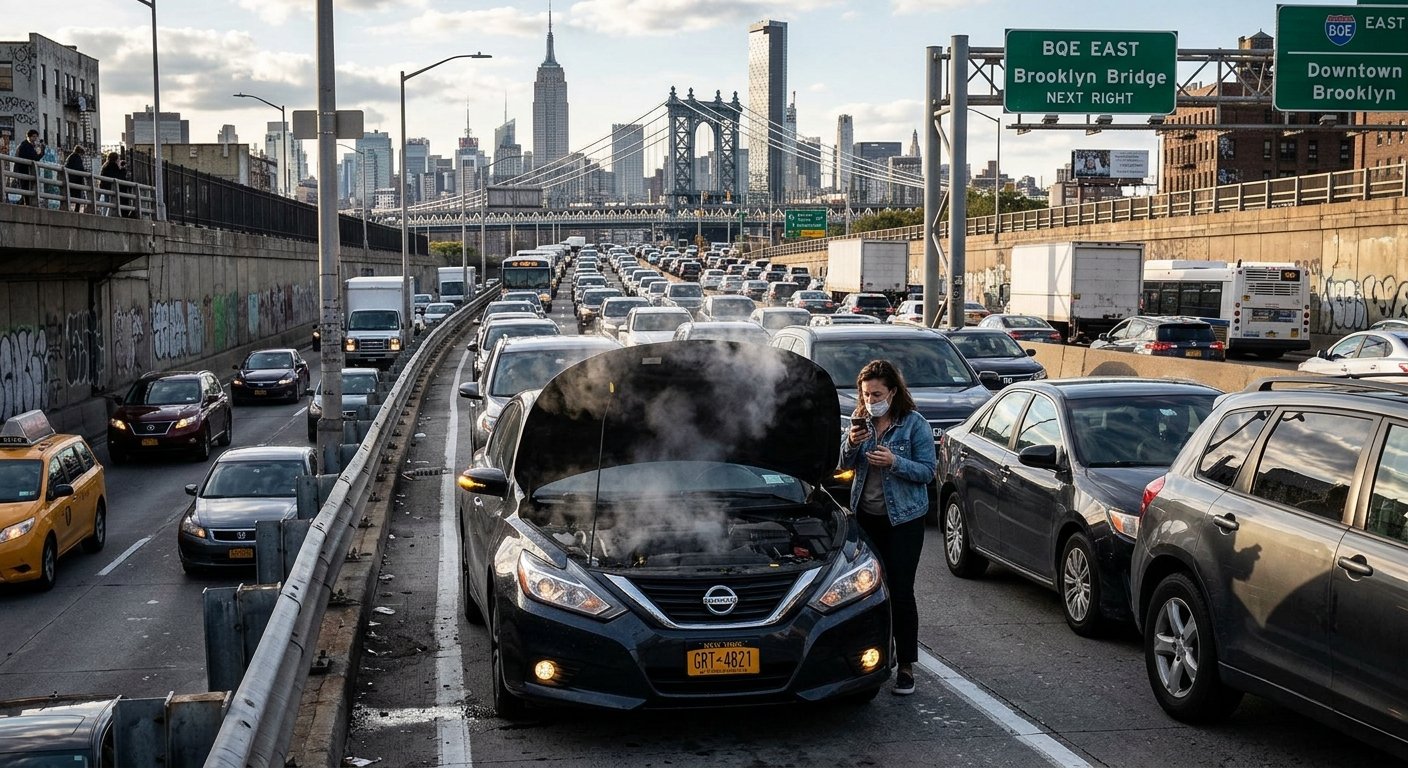
Seeing the temperature gauge climb while you are sitting in traffic can be unsettling. Your car may run normally on an open road, then begin to overheat when you slow down. That change is a useful clue, but it does not identify the cause on its own. The cooling system has several parts, and a problem with any one of them can affect engine temperature.
Knowing what to watch for can help you respond safely and explain the problem clearly when you arrange an inspection.
What to Do When the Temperature Rises
If the temperature warning light comes on or the gauge moves into the hot range, find a safe place to pull over and turn off the engine. Steam, a strong hot smell, or coolant beneath the car are further signs that it needs attention.
Let the engine cool before checking anything under the hood. Never remove a radiator or coolant cap while the system is hot; pressurized coolant can cause serious burns. If the car continues to overheat, arrange assistance rather than trying to complete the trip.
Why Traffic Can Bring the Problem Out
Driving at speed pushes air through the radiator, helping it release heat. In slow traffic, the cooling fan becomes more important. If that fan is not working properly, engine temperature may rise at a stoplight and fall again once the car is moving.
Low coolant can create a similar pattern. A leak from a hose, radiator, water pump, or another part of the system may leave too little fluid to carry heat away. Other possible causes include a thermostat that does not open as it should or a radiator that cannot cool the fluid effectively. An inspection is needed to tell them apart.
Signs to Mention to a Mechanic
Before a visit, make a note of when the overheating happens. Does the gauge rise only while idling, or does it also climb on the highway? Have you noticed a puddle after parking? Does the heater blow warm air as usual? These details can help a Brooklyn Auto Mechanic narrow down where to start.
Also mention any recent work, even if it seemed unrelated. A cooling system problem can appear soon after a hose, radiator, or thermostat has been replaced. Clear information helps the mechanic test the system instead of relying on a guess.
Car Maintenance Brooklyn Drivers Can Prioritize
Routine checks can sometimes reveal a cooling issue before it becomes a roadside problem. Follow your vehicle’s maintenance schedule for coolant service and have visible leaks investigated. If you check the coolant level yourself, do so only when the engine is cool and use the specifications in your owner’s manual.
Pay attention to changes in the temperature gauge, even if no warning light appears. A gauge that regularly sits higher than it used to may deserve an inspection. The goal of car maintenance Brooklyn drivers can rely on is to notice changes early and understand what caused them.
When Engine Repair May Be Needed
Overheating does not automatically mean major engine damage. A faulty fan or leaking hose may be found before the engine itself is affected. Repeatedly driving while the temperature is too high, however, can lead to more serious problems.
If you are looking into engine repair Brooklyn options, ask what tests support the diagnosis. A mechanic may check for leaks, inspect fan operation, and assess the cooling system before recommending a repair. BMSA Auto Care lists vehicle diagnostics, radiator and thermostat work, and engine repairs among its services. Whatever shop you choose, an explanation of the findings can help you understand the proposed work.
Conclusion
An overheating car needs prompt attention, particularly when the temperature keeps rising in traffic. Pull over safely, allow the engine to cool, and note when the problem occurs. Those observations give an Auto Repair Brooklyn technician a better starting point for finding the cause and checking whether the engine has been affected.
Frequently Asked Questions
Can I drive if my car overheats only at stoplights?
The pattern may point toward an airflow or cooling fan issue, but it still needs diagnosis. Stop driving if the gauge enters the hot range or a temperature warning appears.
Is low coolant always caused by a leak?
Coolant levels can change for several reasons. If you repeatedly need to add coolant, have the system checked rather than simply topping it up.
Does overheating always require engine repair?
No. The cause may be elsewhere in the cooling system. An inspection can establish what failed and whether the engine needs further testing.