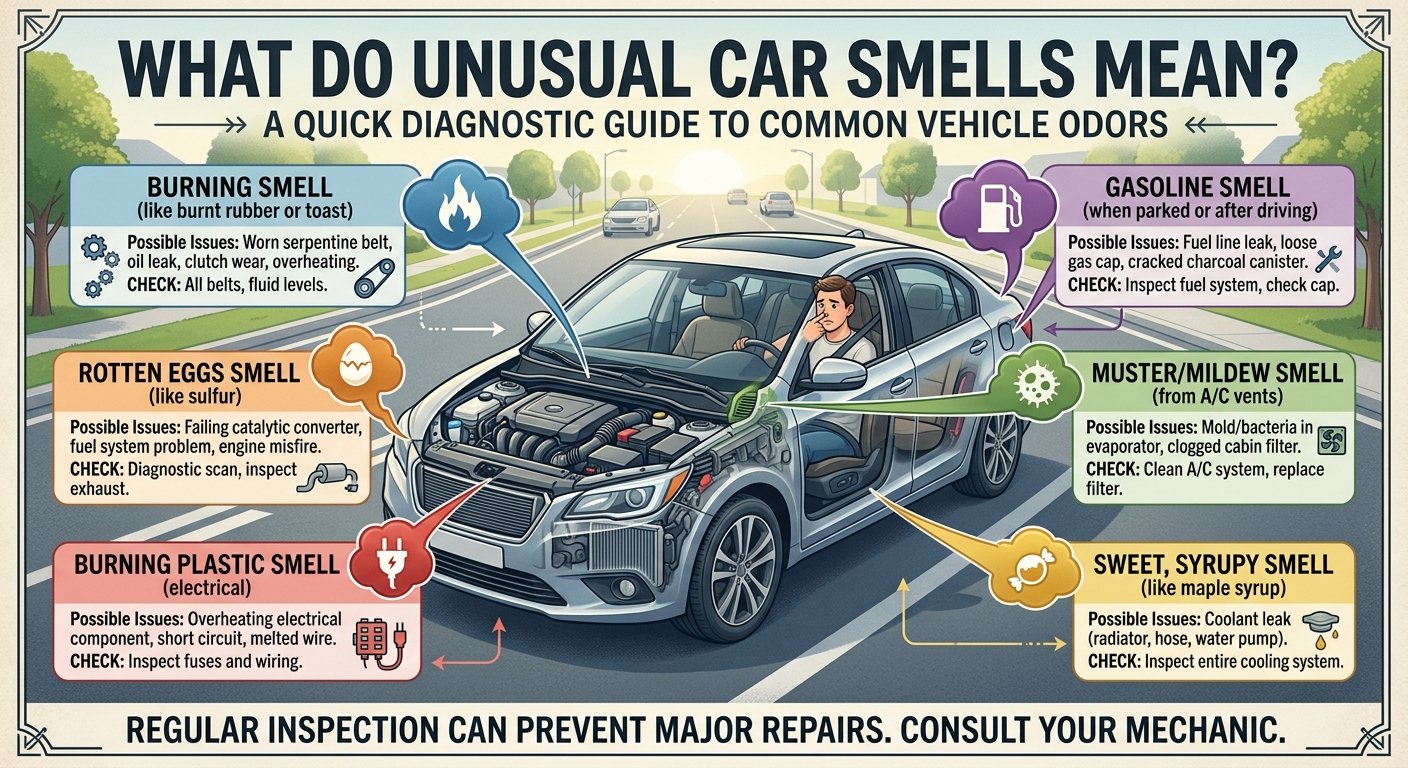
An unfamiliar smell inside or around a vehicle can be an early warning sign. Some odors come from minor issues, while others may point to overheating, leaking fluids, or an electrical fault. Paying attention to when the smell appears can help a mechanic identify the cause.
If an odor is strong, accompanied by smoke, or linked to poor vehicle performance, find a safe place to stop and switch off the engine.
A Sweet Smell
A sweet smell often suggests leaking engine coolant. It may appear inside the cabin, beneath the hood or near the front of the vehicle. Other signs can include a rising temperature gauge, low coolant level, or colored fluid under the car.
Coolant leaks may come from a hose, radiator, water pump, or heater core. Since a low coolant level can cause overheating, the problem should be inspected promptly. Never remove the coolant cap while the engine is hot.
A Burning Oil Smell
Oil can produce a strong burning smell if it leaks onto a hot engine or exhaust component. Drivers may also notice smoke from beneath the hood or oil spots where the car was parked.
An oil leak does not always mean that major engine repair Brooklyn services are needed, but allowing the level to fall too low can damage internal engine parts. Check the oil level safely and arrange an inspection to locate the leak.
A Burning Rubber Odour
A rubber smell may come from a slipping belt, overheated tire, or hose touching a hot component. It can also appear when a clutch overheats in a manual vehicle.
Avoid touching moving or hot parts under the hood. A Brooklyn auto mechanic can inspect belts, hoses, tires, and related components to determine which part is producing the smell.
An Electrical Burning Smell
The smell of burning plastic or insulation can indicate overheated wiring, a short circuit, or a failing electrical component. Warning lights, flickering lights, or equipment that stops working may appear at the same time.
Electrical odors require quick attention because damaged wiring can present a fire risk. Turn off unnecessary electrical accessories and stop driving if smoke appears.
A Sulfur or Rotten Egg Smell
A sulfur-like smell can be connected to the fuel or emissions system. Possible causes include a catalytic converter problem, an overly rich fuel mixture, or a battery fault.
Because several systems can create a similar odor, vehicle diagnostics are useful. An Auto Repair Brooklyn technician may review fault codes, live engine data, and exhaust performance before recommending repairs.
Musty Air From the Vents
A damp or musty smell from the ventilation system may be caused by moisture, mold, or a dirty cabin air filter. Replacing the filter and checking the air-conditioning drainage system may help.
Routine car maintenance Brooklyn drivers’ arrangements should include filter checks, fluid inspections, and attention to unusual changes. These small observations can reveal developing problems before they become difficult to manage.
BMSA Auto Care lists maintenance, diagnostics, electrical, air-conditioning, engine, and exhaust work among its vehicle services. Whichever workshop you visit, explain when the smell began, where it is strongest, and whether any warning lights are present.
Conclusion
Unusual car smells can provide useful clues about coolant leaks, oil leaks, worn belts, electrical faults, or emissions problems. Do not cover the smell with an air freshener and continue driving without investigation. Record when it occurs and arrange an inspection if it persists.
Frequently Asked Questions
Is it safe to drive with a burning smell?
Stop driving if the smell is strong, smoke appears, or the vehicle behaves differently. Arrange assistance if you are uncertain.
Why does my car smell only when the heater is on?
The source may be inside the ventilation system, near the heater core or within the engine bay.
Can diagnostics identify the smell?
Diagnostic codes can provide clues, but a physical inspection may still be needed to locate a leak or damaged component.