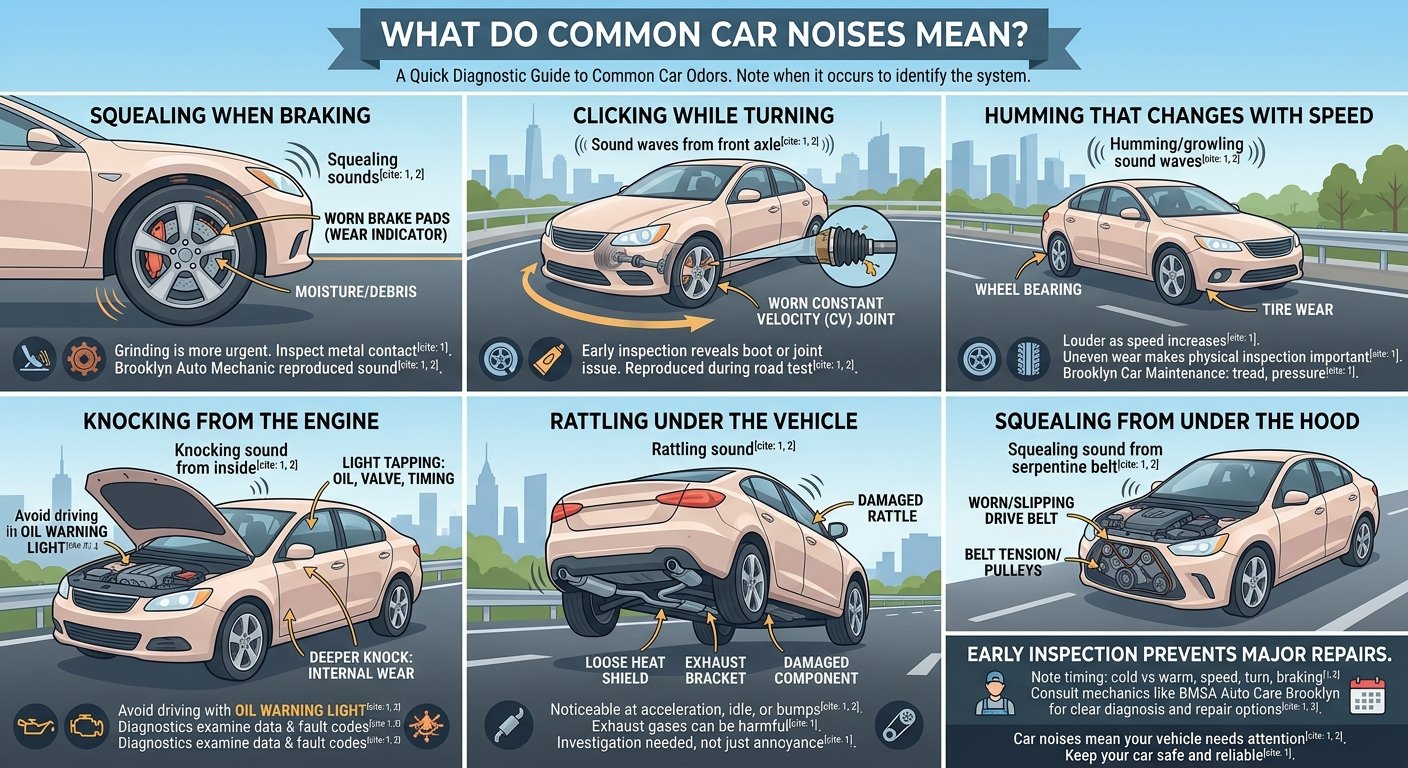
Cars produce many normal sounds, but a new rattle, squeal or knocking noise deserves attention. The sound may appear only when starting the engine, braking, turning or driving over uneven roads. Noting exactly when it occurs can help identify the affected system.
Some noises come from ordinary wear, while others may signal a problem that could affect safety or cause further damage.
Squealing When Braking
A high pitched squeal during braking may be caused by worn brake pads, moisture, surface rust or debris. Some brake pads include wear indicators designed to make noise when replacement is approaching.
Grinding is more concerning because it can mean that the friction material has worn away, allowing metal components to contact each other. If braking performance changes or the pedal feels unusual, arrange an inspection promptly.
Clicking While Turning
A repeated clicking sound during a tight turn can indicate wear in a constant velocity joint. These joints transfer power to the wheels while allowing the suspension and steering to move.
A damaged protective boot may allow grease to escape and dirt to enter. Early inspection can help determine whether the boot, joint or another steering component needs attention. A Brooklyn Auto Mechanic can reproduce the sound during a road test and inspect the parts underneath the vehicle.
Humming That Changes With Speed
A humming or growling sound that becomes louder as road speed increases may relate to a wheel bearing or tire. Uneven tire wear can create a similar noise, making a physical inspection important.
Tire pressure, tread condition and rotation should form part of routine car maintenance Brooklyn drivers arrange. If the vehicle also pulls, vibrates or feels unstable, the tires, wheels, alignment and suspension may all need checking.
Knocking From the Engine
Engine knocking can describe several different sounds. A light tapping may be connected to oil level, valve components or ignition timing, while a deeper knock may indicate internal wear.
Check the oil level according to the owner’s manual and avoid driving if the oil warning light appears. Vehicle diagnostics can examine engine data and stored fault codes, but mechanical testing may also be required. A warning code provides a starting point rather than a complete diagnosis.
Rattling Under the Vehicle
A metallic rattle beneath the car may come from a loose heat shield, exhaust bracket or damaged exhaust component. It may be most noticeable during acceleration, at idle or when driving over bumps.
Exhaust problems can also create unusual smells or louder engine noise. Since exhaust gases can be harmful, damage should be investigated instead of being treated only as an annoying sound.
Squealing From Under the Hood
A squeal when starting the car or using the air conditioner may indicate a worn or slipping drive belt. Belt tension, pulleys and connected components should be inspected together.
Ignoring the sound could lead to belt failure, which may affect charging, cooling or steering systems depending on the vehicle. Stop driving if the engine overheats or the steering suddenly becomes difficult.
Why the Timing of the Noise Matters
Tell the technician whether the noise occurs when the engine is cold, after warming up, during braking, on turns or at a particular speed. Record a short video or audio clip if it can be done safely.
BMSA Auto Care lists maintenance, diagnostics, brake, tire, suspension, engine and exhaust services. When comparing Auto Repair Brooklyn options, ask how the sound will be tested and what evidence supports the proposed repair. Clear diagnosis is especially important before approving extensive work.
Conclusion
A new car noise is often easier to diagnose when its timing and location are carefully described. Squealing may relate to brakes or belts, clicking can suggest a joint, and humming may come from tires or bearings. Early inspection can prevent a worn component from affecting other parts of the vehicle.
Frequently Asked Questions
Can I keep driving if my car makes a new noise?
It depends on the sound and vehicle behaviour. Stop if braking, steering, temperature or warning lights change.
Why does a noise disappear after the car warms up?
Heat can change fluid flow, clearances and belt behaviour. The temporary nature of the sound is still useful diagnostic information.
Can a mechanic diagnose a noise from a recording?
A recording may help, but a road test and physical inspection are usually needed to confirm the cause.